
The cryptocurrency world never sleeps. While traditional markets take weekends off, crypto markets are busy creating new trends, breaking records, and sometimes giving investors a few unexpected surprises. One day a coin is everywhere on social media, and the next day people are asking, “Wait, what happened?” That is the exciting and sometimes confusing side of digital currencies.
As we move into 2026, cryptocurrencies continue to grow beyond simple online payments. Many blockchain projects are now focusing on artificial intelligence, real-world applications, faster transactions, gaming, decentralized finance (DeFi), and global financial solutions.
However, choosing cryptocurrencies to watch is not about guessing which coin will magically become the next Bitcoin overnight. If that were possible, everyone would be relaxing on a beach with a laptop and a coconut drink. Instead, smart investors usually look at technology, adoption, development activity, and long-term potential.
In this article, we will explore the Top 10 Cryptocurrencies to Watch in 2026, why they are interesting, and what makes them stand out in the competitive crypto market.
Why Cryptocurrency Matters in 2026
Cryptocurrency has changed a lot since Bitcoin first appeared. In the beginning, many people saw digital coins as an experiment. Today, blockchain technology is being used by companies, financial institutions, developers, and online communities around the world.
Some major trends shaping crypto in 2026 include:
- Artificial intelligence and blockchain integration
- Faster and cheaper transactions
- Growth of decentralized finance (DeFi)
- Tokenized real-world assets
- Blockchain gaming and digital ownership
- More government regulation and clearer rules
The future of crypto may not only be about buying and selling coins. It may become part of everyday digital services.
Top 10 Cryptocurrencies to Watch in 2026
| Rank | Cryptocurrency | Main Focus |
|---|---|---|
| 1 | Bitcoin (BTC) | Digital store of value |
| 2 | Ethereum (ETH) | Smart contracts and decentralized apps |
| 3 | Solana (SOL) | Fast blockchain applications |
| 4 | XRP | Global payments |
| 5 | Cardano (ADA) | Research-based blockchain development |
| 6 | Chainlink (LINK) | Blockchain data connections |
| 7 | Avalanche (AVAX) | Scalable blockchain networks |
| 8 | Polygon (POL) | Blockchain scaling solutions |
| 9 | Polkadot (DOT) | Blockchain interoperability |
| 10 | Dogecoin (DOGE) | Community-driven cryptocurrency |
1. Bitcoin (BTC): The King of Cryptocurrency
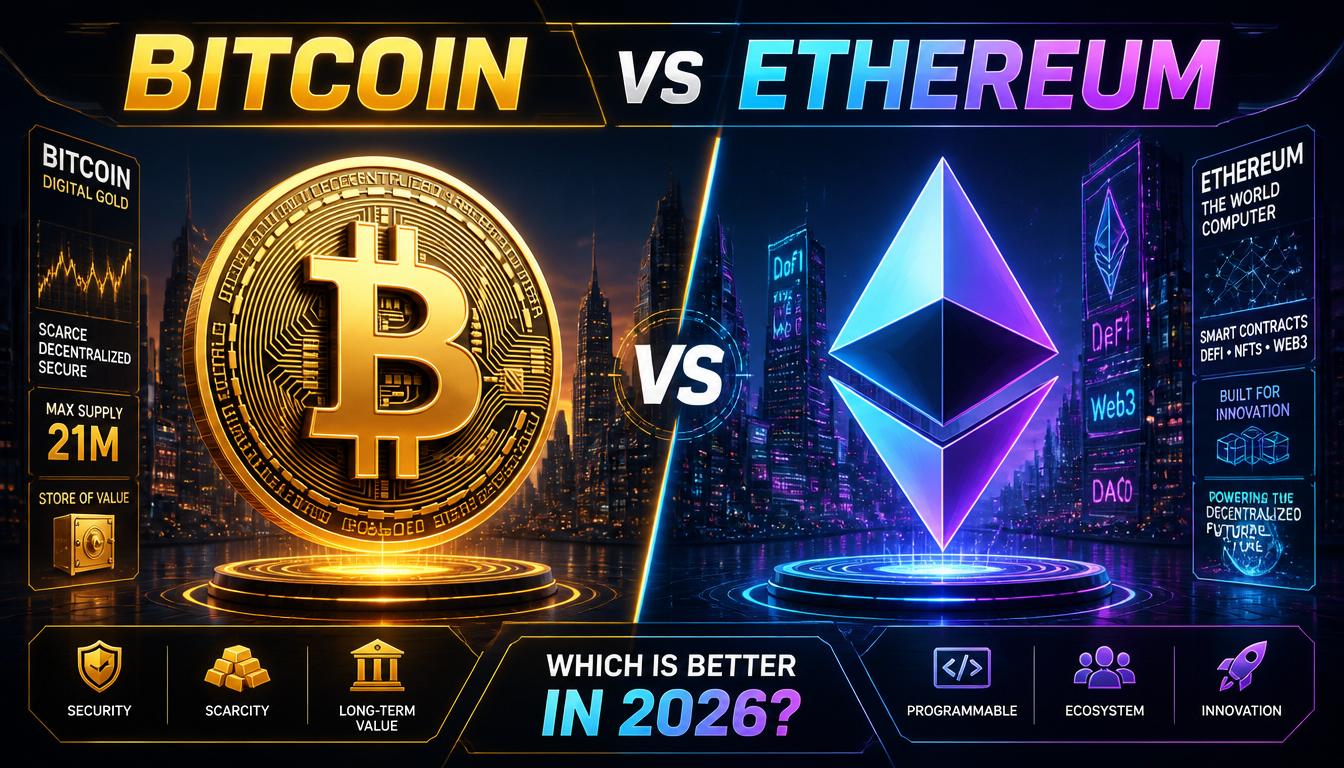
Bitcoin remains the most recognized cryptocurrency in the world. Even people who know nothing about blockchain have usually heard of Bitcoin.
Bitcoin’s biggest advantage is its reputation. It was the first major cryptocurrency and has created a strong global community. Many investors consider Bitcoin a type of “digital gold” because of its limited supply.
In 2026, Bitcoin will continue to attract attention because of:
- Limited supply of 21 million coins
- Growing institutional interest
- Increased global awareness
- Potential use as a store of value
Bitcoin is not the fastest cryptocurrency, but it does not need to be. Sometimes being the first player in the game is a huge advantage.
Think of Bitcoin like the oldest restaurant in town. New restaurants may have fancy decorations, but people still trust the classic place that has been serving customers for years.
2. Ethereum (ETH): The Smart Contract Leader
Ethereum is one of the most important blockchain networks after Bitcoin. Unlike Bitcoin, Ethereum was designed to do more than transfer money.
Ethereum allows developers to build:
- Decentralized applications (dApps)
- DeFi platforms
- NFT marketplaces
- Blockchain-based games
- Digital financial services
Ethereum’s improvements in scalability and efficiency will remain a major focus in 2026.
Many projects depend on Ethereum’s technology, which gives it a strong position in the blockchain industry.
Ethereum is like the smartphone of crypto. Bitcoin is the phone call, but Ethereum is the entire app store.
3. Solana (SOL): Speed and Innovation
Solana became popular because of its high-speed transactions and low fees. Many developers choose Solana because it can handle large numbers of transactions quickly.
Solana is used for:
- Decentralized applications
- Crypto trading platforms
- Gaming projects
- NFT communities
In 2026, Solana may continue growing if developers and users keep choosing its ecosystem.
Its biggest challenge is competition. The blockchain world is crowded, and everyone wants to be the fastest runner in the race.
4. XRP: Cryptocurrency for Global Payments
XRP focuses on improving international payments. Traditional banking transfers can sometimes be slow and expensive, especially across countries.
XRP aims to provide:
- Faster international transactions
- Lower payment costs
- Better connections between financial institutions
Banks and payment companies have shown interest in blockchain-based payment solutions, making XRP one of the cryptocurrencies many people continue watching.
The dream is simple: sending money globally should feel more like sending a message, not sending a letter by old-fashioned mail.
5. Cardano (ADA): A Research-Focused Blockchain
Cardano is known for its academic and research-based approach. The project focuses on building a secure and sustainable blockchain ecosystem.
Cardano emphasizes:
- Scientific development
- Energy efficiency
- Smart contracts
- Long-term blockchain growth
Some investors like Cardano because it focuses on careful development instead of rushing products quickly.
In crypto, moving slowly can sometimes be helpful. Building a house carefully is usually better than building it quickly and discovering the roof is missing.
6. Chainlink (LINK): Connecting Blockchain With Real Data
Blockchains need accurate information from the outside world. This is where Chainlink becomes important.
Chainlink provides oracle technology that helps blockchain applications access real-world information such as:
- Financial data
- Market prices
- Weather information
- Business data
As more industries use blockchain technology, the need for reliable data connections may increase.
Chainlink is like the translator between two worlds: the blockchain world and the real world.
7. Avalanche (AVAX): Flexible Blockchain Technology
Avalanche is designed to provide fast transactions and customizable blockchain networks.
The platform supports:
- Decentralized finance
- Enterprise blockchain solutions
- Custom blockchain applications
Many developers are interested in blockchain networks that offer flexibility and speed.
In 2026, Avalanche could benefit from increasing demand for specialized blockchain solutions.
8. Polygon (POL): Helping Ethereum Scale
Polygon focuses on improving blockchain efficiency, especially for Ethereum-based applications.
The network helps provide:
- Faster transactions
- Lower fees
- Better scalability
As Ethereum adoption grows, scaling solutions like Polygon may become more important.
Imagine Ethereum as a busy highway. Polygon is like adding extra lanes so traffic does not become a giant digital traffic jam.
9. Polkadot (DOT): Connecting Different Blockchains
One major challenge in crypto is that many blockchains operate separately.
Polkadot aims to solve this problem by allowing different networks to communicate.
Its goals include:
- Blockchain connection
- Data sharing
- Better network cooperation
If the future includes many different blockchain systems, projects that help them work together could become valuable.
10. Dogecoin (DOGE): The Community Cryptocurrency
Dogecoin started as a joke but became one of the most famous cryptocurrencies in the world.
Its popularity comes from:
- Strong online community
- Social media attention
- Brand recognition
Although Dogecoin does not have the same technical purpose as some newer blockchain projects, its community power keeps it relevant.
Sometimes the internet proves that a funny idea can become surprisingly successful. Dogecoin is basically the internet saying, “Why not?”
Comparison Table: Strengths and Challenges
| Cryptocurrency | Strength | Possible Challenge |
|---|---|---|
| Bitcoin | Strong reputation | Slower transactions |
| Ethereum | Large ecosystem | Competition and fees |
| Solana | Fast performance | Network reliability concerns |
| XRP | Payment solutions | Regulatory uncertainty |
| Cardano | Research approach | Slower adoption |
| Chainlink | Real-world data | Competition |
| Avalanche | Flexible technology | Market competition |
| Polygon | Scaling solutions | Changing blockchain landscape |
| Polkadot | Blockchain connection | Adoption growth |
| Dogecoin | Strong community | Limited technical use cases |
Factors to Consider Before Investing in Crypto
Cryptocurrency can offer opportunities, but it also carries risks. Prices can change quickly, and market emotions can create unexpected movements.
Before investing, consider:
1. Research the Project
Do not buy a cryptocurrency only because someone online says, “This coin will make everyone rich tomorrow.”
Check:
- Technology
- Development team
- Real-world usage
- Community support
2. Understand Market Risk
Crypto prices can rise quickly and fall quickly. A coin that is popular today may face challenges tomorrow.
Investors should avoid putting money into something they do not understand.
3. Think Long-Term
Successful investors often focus on long-term value instead of daily price changes.
Watching charts every five minutes can become stressful. Your coffee might get cold before your coin decides what it wants to do.
Future Cryptocurrency Trends in 2026
The crypto industry may continue developing in several important areas:
Artificial Intelligence and Blockchain
AI-powered blockchain applications may become more common.
Real-World Asset Tokenization
Properties, financial products, and other assets may become available through blockchain technology.
Better Regulation
Clearer rules may help more businesses and investors enter the market.
More Practical Uses
Cryptocurrency may move beyond speculation into everyday financial services.

Final Thoughts: Which Cryptocurrencies Should You Watch in 2026?
The cryptocurrency market in 2026 will likely remain exciting, competitive, and unpredictable. Bitcoin and Ethereum continue to lead the industry, while projects like Solana, Chainlink, Avalanche, and Polygon are working on new blockchain solutions.
There is no guaranteed winner in crypto. A project with great technology today may face problems tomorrow, while a smaller project may suddenly gain attention.
The smartest approach is not chasing every online trend. Instead, focus on learning, researching, and understanding the technology behind each cryptocurrency.
Crypto is a fast-moving world where patience, knowledge, and careful decisions matter. The future may belong to the projects that solve real problems and create useful technology.







Leave a Reply